
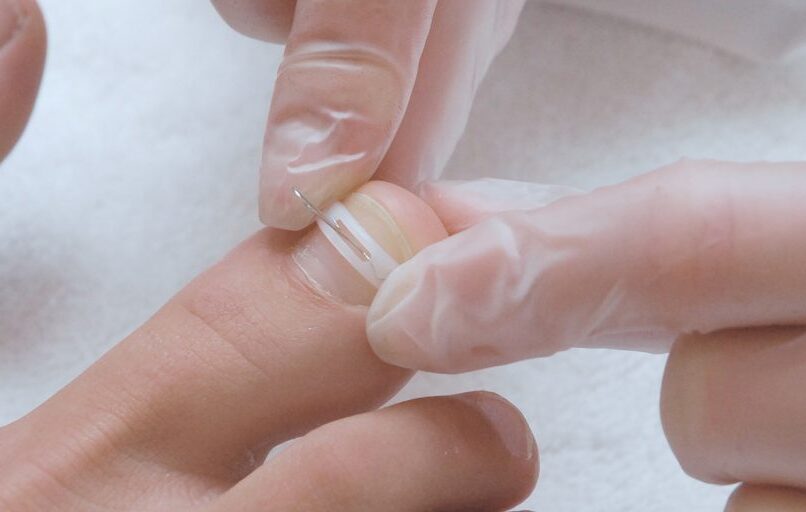
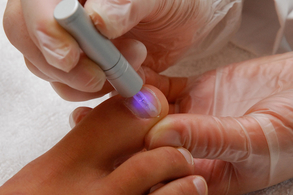
What is Nail Bracing?
Nail bracing offers immediate relief from the pressure caused by toenails without requiring surgery or local anaesthetic. This treatment provides long-term improvement to the aesthetic appearance of toenails while preventing the regrowth of ingrown toenails. Patients experience no restrictions to their everyday life during treatment, and this form of nail correction is suitable for nearly everyone, from small children to diabetics and those with nickel allergies.
What is Podofix®
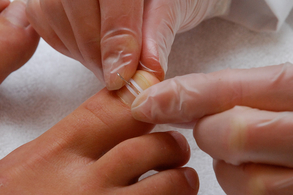
Podofix® is an innovative method of correcting all forms of ingrown and inrolled nails. This form of nail correction is suitable for nearly everyone – also small children and diabetics. Therapists and their patients are convinced by the medical and cosmetic results.
Podofix® is a gentle alternative for correcting malformed nails. It helps deformed nails to grow naturally and healthily. Through this simple method one can avoid surgery and discomfort is relieved quickly and painlessly. Its effect is long lasting.
Podofix® is individually fitted to the form of the nail and usually brings instant relief to the patient. The adhesion and activation of the brace only takes a few minutes and can hardly be felt. There are seldom restrictions on everyday life, sport or in water.
Nail Bracing Treatment & Applicationdry needling?
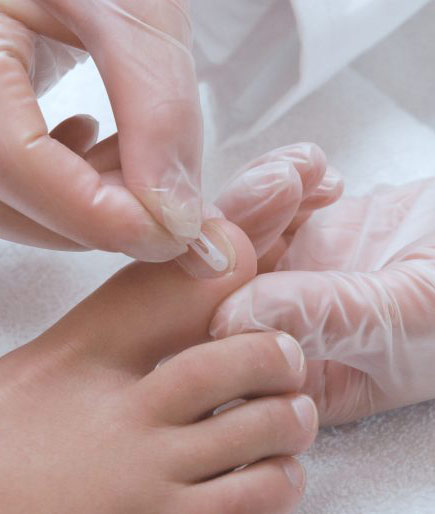
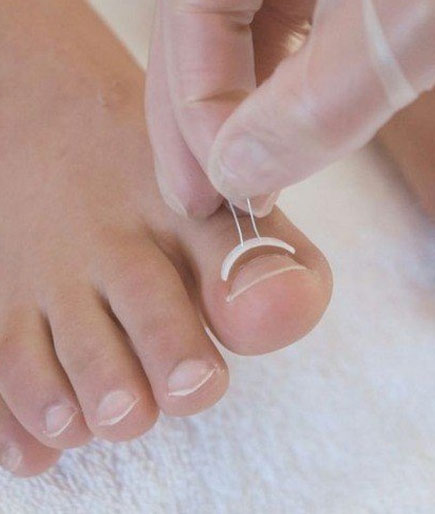
- The plastic pad of the Podofix® Active Adhesive Brace is individually fitted to the patient by simply bending it to the form of the nail.
- The brace is initially glued without tension, to the nail. The glue hardens in about one minute, then the brace is activated by twisting the wire loop.
- The brace acts to slightly lift the sides of the nail and the surrounding tissue is relieved of the pressure. The tension can be agreed upon with the patient.
- Superfluous wire is then cut off and the notch of the Podofix® Active Adhesive Brace is filled with PediGel thus sealing the wire in a few seconds. This treatment method is suitable for all age groups and can also be used on diabetics and those with an allergy to nickel.
Contact Galleria Podiatry to discuss Podofix®
Nail bracing offers immediate relief from the pressure caused by toenails without requiring surgery or local anaesthetic.
Nail Bracing FAQs
What can I expect during the Dry Needling procedure?
We often have patients tell us that they’re scared of needles and, therefore, have not considered dry needling; however, you’ll be pleased to know that the needle used for dry needling is 10 times thinner than a regular needle. When the needle is inserted, it feels like a small twitch in the muscle. It’s been described as feeling like a slight ‘prick’ but is painless. See Rachel Lange performing dry needling in our Perth clinic.
How is dry needling any different from acupuncture?
Dry needling focuses on stimulating specific trigger points within the body, which ultimately results in pain and disability. Additionally, with dry needling, the needles are slowly inserted into the body and removed after a short period, whereas with acupuncture, the needles are left in the body for some time. Dry needling is specifically designed to treat neuromuscular issues, with acupuncture designed to address energy flow around the body and vital organs.
Is dry needling painful?
When the needle is inserted into the skin and muscle, some patients may feel a slight prick similar to a pinprick. The most significant sensation, known as the “twitch response,” occurs when the needle reaches a trigger point. This response can feel like a quick muscle cramp or twitch and is often described as a surprising or strange sensation rather than painful. Following the treatment, it’s common for the area that was needed to feel sore, similar to the soreness felt after an intense workout. This soreness typically lasts for a day or two. Healthcare professionals trained in dry needling use techniques to minimise discomfort, and many patients find that the benefits of reduced pain and improved function outweigh any temporary discomfort experienced during the procedure. Patients are encouraged to communicate with their practitioner about any concerns or discomfort they may experience during the treatment to adjust the technique as needed.
How many visits will I need?
We generally recommend 4 – 6 sessions in order to see positive and lasting results, however results can be seen in the first 24 hours after your dry needling session.
I've tried everything – is dry needling worth it?
Well, in many people’s opinions, it is. Personally, at Galleria Podiatry, we have had very positive reactions from people who have had dry needling done. The results we have seen include a decrease in muscle pain, an increase in muscle function, and quicker recovery times from injury.