
What is a Nail Fungus
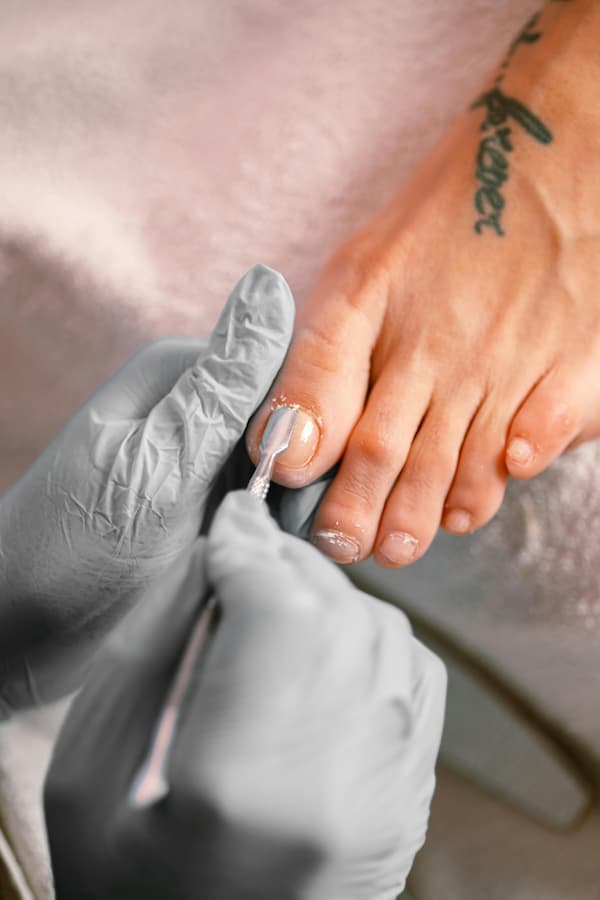
Nail fungus, also known as onychomycosis, is a common condition that occurs when a fungal infection affects one or more of the nails. This can happen on both fingernails and toenails but is more common on the latter. It often begins as a yellow or white spot under the tip of the nail. As the infection deepens, it may cause the nail to discolour, thicken, and crumble at the edge. Over time, the condition may become uncomfortable or even painful.
Nail fungus is generally caused by a type of fungus called dermatophytes, although yeasts and moulds can also be culprits. These organisms thrive in warm, moist environments, which makes sweaty shoes and public showers common places to contract the infection.
The likelihood of developing nail fungus increases with age, poor circulation, a weakened immune system, and exposure to moist environments like swimming pools, gyms, and showers. Those with diabetes or athlete’s foot are also at greater risk.

Toenail fungus Prevention
Preventative measures include: Thoroughly dry feet after bathing, Apply a topical antifungal solution daily, Rotate shoes regularly to allow them to air and dry, Apply an antifungal powder or spray to rid shoes of fungus, Wash hosiery in hot water and even apply an antifungal solution to the washing cycle, Wear thongs in public showers and at swimming centres, Disinfect shower floor, Don’t share nail clippers
How Toenail fungus is diagnosed?
At Galleria Podiatry, we also use the Diafactory test which is a rapid, in-clinic diagnostic tool for fungal nail infections, providing results in about 5 minutes with up to 99% accuracy.
Galleria Podiatry Treatments & Services for toenail fungus
Photodynamic Therapy
It can be frustrating to have to apply the lacquers daily/weekly especially considering it takes at least 3 months to see improvement, given the slow growth of toenails. Furthermore, prescribed oral medications can interact with other drugs and can produce adverse effects, making them unsuitable for some people.
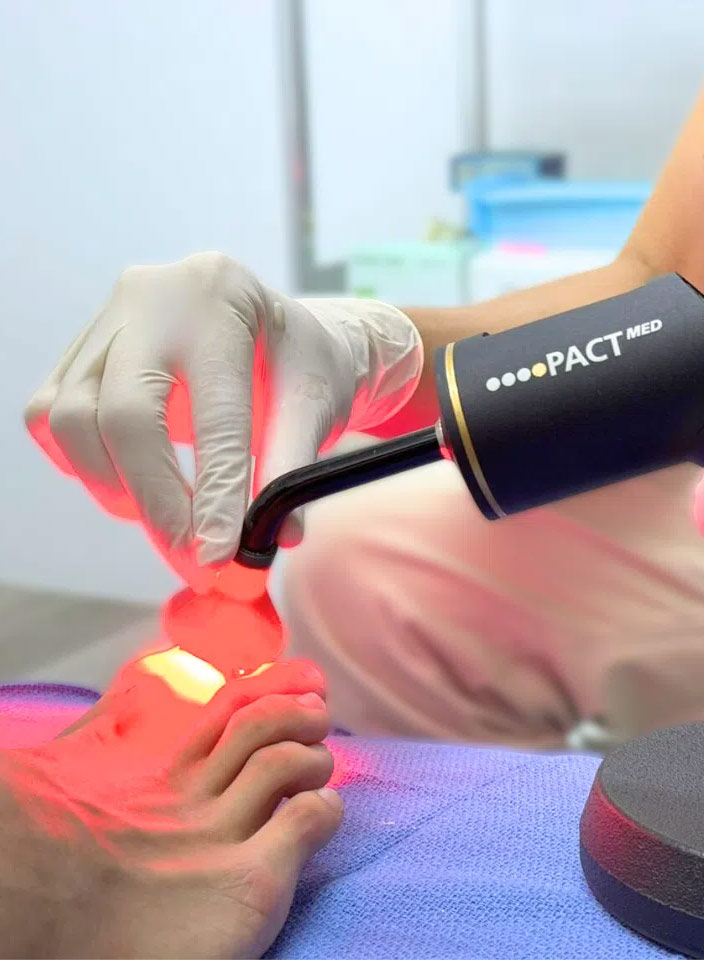
Photodynamic Therapy is an alternative treatment provided by Galleria Podiatry to treat toenail fungus. A single PACT nail fungus treatment session will involve the following:
- Our Podiatrists will firstly debride and remove all of the infected part of the nail.
- A special PACT nail fungus gel is then applied to the nail and left to absorb for 10 minutes. This gel stains the fungal cells making them sensitive to the light emitted by the scientifically tested PACT LED lamp.
- The PACT LED light is applied for 9.5 minutes, penetrating the nail and destroying the fungal cells.
PACT nail fungus therapy is 100% safe with no known contra-indications. Repeated exposure to the light does not produce any adverse effects.
Restore Your Nails
At Galleria Podiatry we offer KeryFlex™ treatment to restore the appearance of toenails. KeryFlex™ is a treatment that can restore the appearance of toenails affected by nail fungal infection, nail deformity, psoriasis nails, nail affected by trauma.
Do you have toenail fungus concerns?
For expert advice regarding toenail fungus, consult Galleria Podiatry for a tailored treatment plan.
Your Nail Fungus Questions Answered
What is nail fungus and how does it develop?
Nail fungus, also known as onychomycosis, is a common condition that occurs when a fungal infection affects one or more of the nails. It’s more common on toenails than fingernails and often begins as a yellow or white spot under the tip of the nail. As the infection deepens, it may cause the nail to discolour, thicken and crumble at the edge. Over time, the condition may become uncomfortable or even painful. It’s estimated that toenail fungus affects up to 1.6 million Australians.
What causes nail fungus and where is it commonly contracted?
Nail fungus is generally caused by a type of fungus called dermatophytes, although yeasts and moulds can also be culprits. These organisms thrive in warm, moist environments, which makes sweaty shoes and public showers common places to contract the infection. Common sources include swimming pools, gyms and showers where people walk barefoot in warm, moist conditions.
Who is most at risk of developing nail fungus?
The likelihood of developing nail fungus increases with age, poor circulation, a weakened immune system and exposure to moist environments like swimming pools, gyms and showers. Those with diabetes or athlete’s foot are also at greater risk. The combination of these risk factors can make certain individuals more susceptible to developing this stubborn infection.
How can I prevent nail fungus from developing or recurring?
Preventative measures include keeping the feet clean and dry, wearing moisture-wicking socks, using antifungal sprays or powders, and avoiding walking barefoot in public places like locker rooms or swimming pools. Because nail fungus can be stubborn and recurrence is common, maintaining these preventive habits is essential even after successful treatment.
What treatment options are available at Galleria Podiatry for nail fungus?
Galleria Podiatry offers Photodynamic Therapy (PACT) as an alternative to daily lacquer applications or oral medications. A single PACT treatment involves debriding the infected nail, applying a special gel that stains fungal cells, and using a scientifically tested LED lamp for 9.5 minutes to destroy the fungal cells. PACT therapy is 100% safe with no known contraindications. Additionally, Galleria Podiatry offers KeryFlex™ treatment to restore the appearance of toenails affected by fungal infection, nail deformity, psoriasis or trauma. Diagnosis usually involves a visual inspection and may be confirmed through lab tests like nail clippings or scrapings.