


What is Arthritis
Arthritis is a term used to describe more than 100 medical conditions that affect the musculoskeletal system. It causes inflammation, pain, stiffness, swelling, redness, and reduced joint motion where one or two bones meet. Arthritis can affect any joint, but it is particularly common in the small joints of the foot and ankle.
Four major types of arthritis can affect the feet and ankles: osteoarthritis, rheumatoid arthritis (RA), post-traumatic arthritis, and gout.
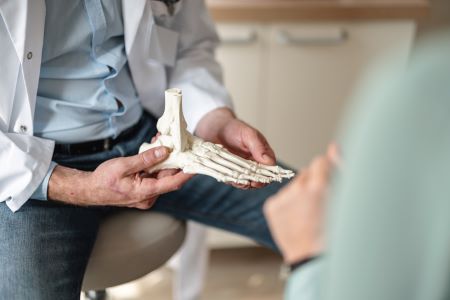
The four major types of arthritis can affect the feet and ankles
Osteoarthritis
Osteoarthritis is the progressive loss of articular cartilage that protects the joints, due to wear and tear on the joint.
It causes new bone and cartliage formation (osteophytes) at the joint margins. This causes pain and a narrowing of the joint spaces as the joint surfaces rub together.
The most common cause of osteoarthritis is trauma through wear and tear on the joint surfaces. Some people have a genetic / hereditry predisposition for localised osteoarthritis in one or more joints. Other factors such as body weight increase the wear and tear on lower limb joints and, therefore increase the chance of developing osteoarthritis.
Pain can be treated with anti-inflammatory medication and exercise to maintain mobility in the joints, and in severe, cases surgical intervention may be required. When osteoarthritis is present in the feet and lower limbs, orthotics (custom-made shoe inserts) may be used to stabilise the joints and prevent and / or slow the progression of wear and tear on the joints. Pain relieving creams can be found in our shop.
Gout
Gout is caused by tiny crystals that form in the joints of the body. These crystals are produced by a build-up of uric acid, a type of waste material the body produces. Although many joints of the body can be affected, gout usually affects one joint at a time, with the big toe joint being the most common. Gout attacks often last around one week and may settle for several months or years.
However, it can also develop into a long-term condition.
Rheumatoid arthritis
Rheumatoid arthritis (RA) is a chronic autoimmune disease that can affect joints throughout the body but usually begins in the feet and ankles. In RA, the immune system attacks the lining of the joints, causing inflammation, swelling, and joint damage. A characteristic of RA is that it often affects the same joint on both sides. R/A can present itself in the feet by:
- deforming the toes
- affecting the ankle joint, resulting in the feet collapsing inward
- weakening bones through osteoporosis
- muscle pain and weakness
- nodule growth
Your Galleria Podiatry podiatrist can look at ways to:
- reduce pain
- reduce joint destruction
- avoid deformities
- improve mobility
Post-traumatic arthritis
Post-traumatic arthritis is a type of arthritis caused by a physical injury to the joint. It can occur after an injury to the foot or ankle, such as a dislocation or fracture. If you sustain a joint injury, you are seven times more likely to develop arthritis in that joint compared to an uninjured joint, even if the injury fully heals. However, like osteoarthritis, post-traumatic arthritis may take many years to develop.
Symptoms of foot and ankle arthritis
If you have foot and ankle arthritis, the symptoms you experience will vary based on the type of arthritis and which joint is affected. Generally, the joint that is affected will be painful and inflamed. In most instances, arthritis symptoms develop gradually. However, with gout, they can occur suddenly. Common symptoms of foot and ankle arthritis include:
- Pain when moving the joint
- Pain during strenuous activity
- Tenderness around the joint when pressure is applied
- Warm, swollen, and red joints
- Joint stiffness
- Increased pain and swelling after rest or in the morning
- Loss of joint function
- Deformities or changes in the shape of your foot and toes
- Bone spurs (which are caused by osteoarthritis)
- Difficulty walking due to any of the above symptoms.

What factors increase the risk of foot and ankle arthritis?
Arthritis has no single cause, but certain factors can increase the risk of developing it, such as family history, age, gender, previous injury, and weight.
HOW IS ARTHRITIS DIAGNOSED?
In order to diagnose arthritis, it may be necessary to undergo multiple tests. Firstly, a physical examination will be conducted to check for signs of tenderness, swelling, or redness. Your healthcare provider may also ask about your pain, history of injuries, and family history of arthritis. They may also inspect your shoes to assess any abnormal wear and evaluate your gait.
Additional tests such as X-rays, bone scans, ultrasounds, CT scans, or MRI scans may be required to confirm the diagnosis. Blood tests are often used to diagnose rheumatoid arthritis and gout.
How to prevent foot and ankle arthritis
Preventing arthritis in your feet and ankles isn’t always possible. However, you can reduce your risk by:
- maintaining a healthy weight
- keeping uric acid levels low, as this can prevent an attack of gout. Speak to your health practitioner about whether you’re at risk and what steps you should take
- avoid a joint injury by warming up properly before you exercise, wearing appropriate shoes for your activity, and wearing an ankle brace or support if you have injured your ankle previously
- seek immediate treatment for injuries to your feet and ankles, as injuries that don’t heal properly are more susceptible to developing arthritis later on.
Arthritis in your feet and ankles can cause significant pain and impact your life in many ways. Why not give us a call and make an appointment? There is a lot we can do to help.

Is there a treatment for foot and ankle arthritis?
Unfortunately, there is no cure for arthritis, but there are treatments available to manage the symptoms. Here are some home remedies that can help reduce pain and inflammation associated with arthritis:
- Maintain a healthy weight to reduce pressure on your joints.
- Apply heat packs to stiff, painful joints and ice packs to hot, swollen joints.
- Over-the-counter painkillers and nonsteroidal anti-inflammatory drugs can provide relief.
- Regular exercise can keep your joints moving while avoiding activities that aggravate your arthritis.
- Wear supportive, well-fitting shoes.
If you have arthritis in your feet or ankles, podiatry treatment is recommended. We can provide you with advice on appropriate footwear, prescribe orthotics, and recommend exercises to help fight stiffness without worsening your condition.
For some forms of arthritis, such as rheumatoid arthritis, prescription medication may be necessary to prevent or slow down the immune system from attacking the joints. Corticosteroids can also be helpful in reducing inflammation and suppressing the immune system.
In rare cases where the above methods do not provide relief or if arthritis has caused deformity or disability, surgery may be recommended. Please make an appointment to discuss your options.

Concerned about your foot and ankle arthritis??
Please make an appointment to discuss your options.
Your Arthritis Questions Answered
What are the four major types of arthritis that can affect the feet and ankles?
Four major types of arthritis can affect the feet and ankles: osteoarthritis, rheumatoid arthritis (RA), post-traumatic arthritis, and gout. Osteoarthritis is the progressive loss of articular cartilage due to wear and tear on the joint. Rheumatoid arthritis is a chronic autoimmune disease where the immune system attacks the lining of the joints. Post-traumatic arthritis is caused by a physical injury to the joint, such as a dislocation or fracture. Gout is caused by tiny crystals that form in the joints due to a build-up of uric acid.
What are the common symptoms of foot and ankle arthritis?
Common symptoms include pain when moving the joint or during strenuous activity, tenderness around the joint when pressure is applied, warm, swollen and red joints, joint stiffness, increased pain and swelling after rest or in the morning, loss of joint function, deformities or changes in the shape of your foot and toes, bone spurs (caused by osteoarthritis), and difficulty walking due to any of these symptoms. The symptoms you experience will vary based on the type of arthritis and which joint is affected.
How is arthritis in the feet and ankles diagnosed?
Diagnosis may require multiple tests. Firstly, a physical examination is conducted to check for signs of tenderness, swelling or redness. Your healthcare provider may also ask about your pain, history of injuries and family history of arthritis. They may inspect your shoes to assess any abnormal wear and evaluate your gait. Additional tests such as X-rays, bone scans, ultrasounds, CT scans or MRI scans may be required to confirm the diagnosis. Blood tests are often used to diagnose rheumatoid arthritis and gout.
What can I do to prevent arthritis in my feet and ankles?
While preventing arthritis isn’t always possible, you can reduce your risk by maintaining a healthy weight, keeping uric acid levels low to prevent gout attacks, avoiding joint injury by warming up properly before exercise, wearing appropriate shoes for your activity, wearing an ankle brace or support if you’ve injured your ankle previously, and seeking immediate treatment for injuries to your feet and ankles. Injuries that don’t heal properly are more susceptible to developing arthritis later on.
What stretches and exercises help with plantar fasciitis?
Effective exercises include calf stretches against a wall, rolling your foot over a frozen water bottle, plantar fascia stretches where you pull your toes back towards your shin, and towel curls to strengthen foot muscles. Stretching should be done gently and consistently, particularly first thing in the morning and before activities. Your podiatrist at Galleria Podiatry can demonstrate proper technique and create a personalised exercise programme tailored to your specific needs.
What treatment options are available for foot and ankle arthritis?
Unfortunately, there is no cure for arthritis, but treatments are available to manage symptoms. Home remedies include maintaining a healthy weight, applying heat packs to stiff joints and ice packs to swollen joints, using over-the-counter painkillers and nonsteroidal anti-inflammatory drugs, regular exercise whilst avoiding activities that aggravate arthritis, and wearing supportive, well-fitting shoes. Podiatry treatment can provide advice on appropriate footwear, prescribe orthotics and recommend exercises. For rheumatoid arthritis, prescription medication may be necessary. Corticosteroids can reduce inflammation, and in rare cases, surgery may be recommended. Your Galleria Podiatry podiatrist can look at ways to reduce pain, reduce joint destruction, avoid deformities and improve mobility.