

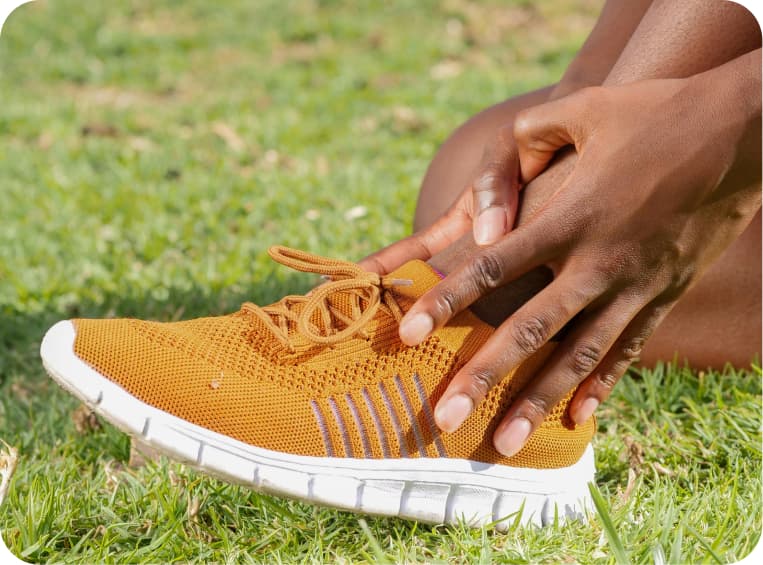
What is Achilles Tendonitis?
Achilles tendonitis is an overuse injury affecting the Achilles tendon, the thick, fibrous cord that connects the muscles in the back of your calf to your heel bone. The condition is characterized by inflammation, pain, and stiffness in the area of the tendon, usually caused by repetitive stress or excessive loading. Achilles tendonitis is a common issue in athletes, particularly those involved in running or high-impact sports, but it can also occur in people who are not athletically active.
There are two types of Achilles tendonitis, based on which part of the tendon is inflamed.
Insertional Achilles Tendonitis
Affects the lower part of the tendon where it attaches to the heel bone. This type can occur even in people who are not active and is often associated with heel spurs.
Non-insertional Achilles Tendonitis
Affects the middle portion of the tendon, typically in younger, active people. In this type, the fibres in the middle of the tendon break down with tiny tears, swell, and thicken.
What Causes Achilles Tendonitis
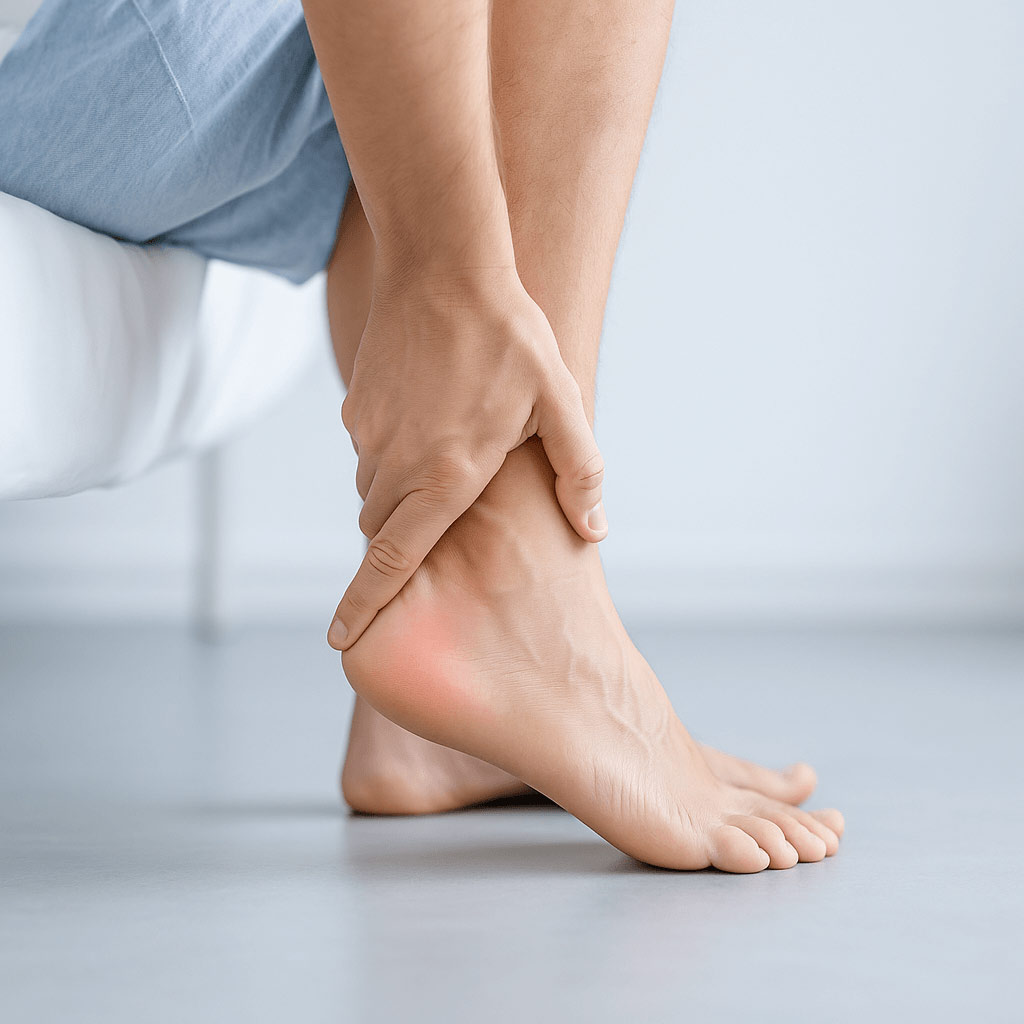
Achilles tendonitis commonly occurs from shearing and traction forces on the Achilles tendon at the back of the heel.
When the foot pronates (“rolls inwards”) excessively, it can create increased traction or over-stretching of the Achilles tendon. This results in increased shearing forces on the tendon which commonly leads to inflammation and pain. Often a lumpy build-up of scar tissue occurs.
Symptoms of Achilles Tendonitis
Sharp pain at the back of the leg, just above the heel, limited ankle flexibility and inflammation over the affected area are often present.
When the foot pronates (“rolls inwards”) excessively, it can create increased traction or over-stretching of the Achilles tendon. This results in increased shearing forces on the tendon, which commonly leads to inflammation and pain.
Often a lumpy build-up of scar tissue occurs.
Achilles Tendonitis in Children
Achilles tendonitis is less commonly found in children than in adults, but it can occur, especially in young athletes or active kids. Overuse or intense physical activity can put stress on the Achilles tendon and lead to inflammation and pain. Children who participate in sports like soccer, basketball, or track and field may be more susceptible to Achilles tendonitis.
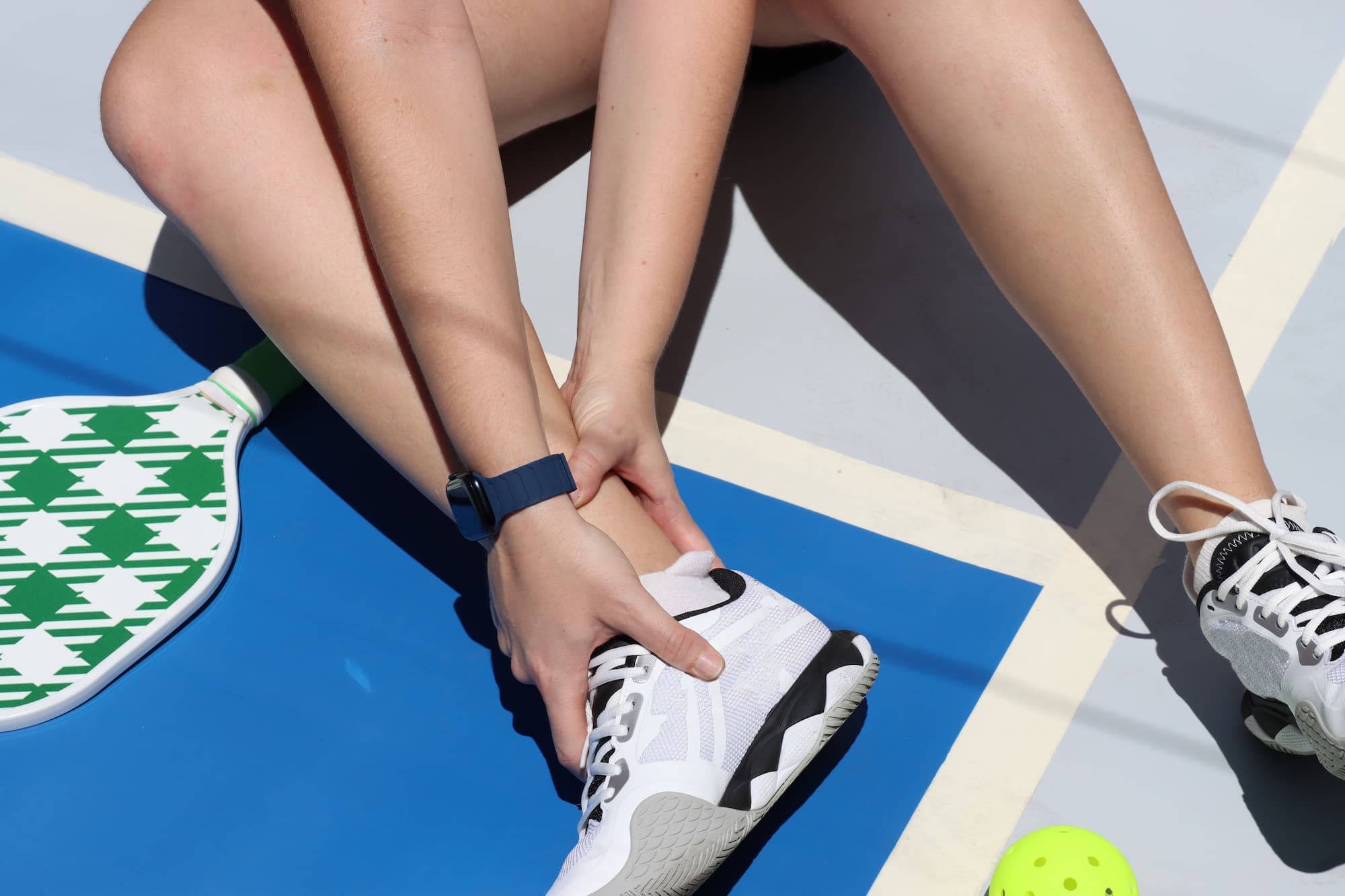
Common Podiatry Treatments & Services for Achilles Tendonitis
By preventing the feet from rolling inwards through the use of orthotics (custom-made shoe inserts), this reduces the over-stretching and traction on the Achilles tendon, therefore alleviating the problems.
Additional therapy, such as shockwave therapy and specific stretching, may also be prescribed by Galleria Podiatry. Book an appointment today!
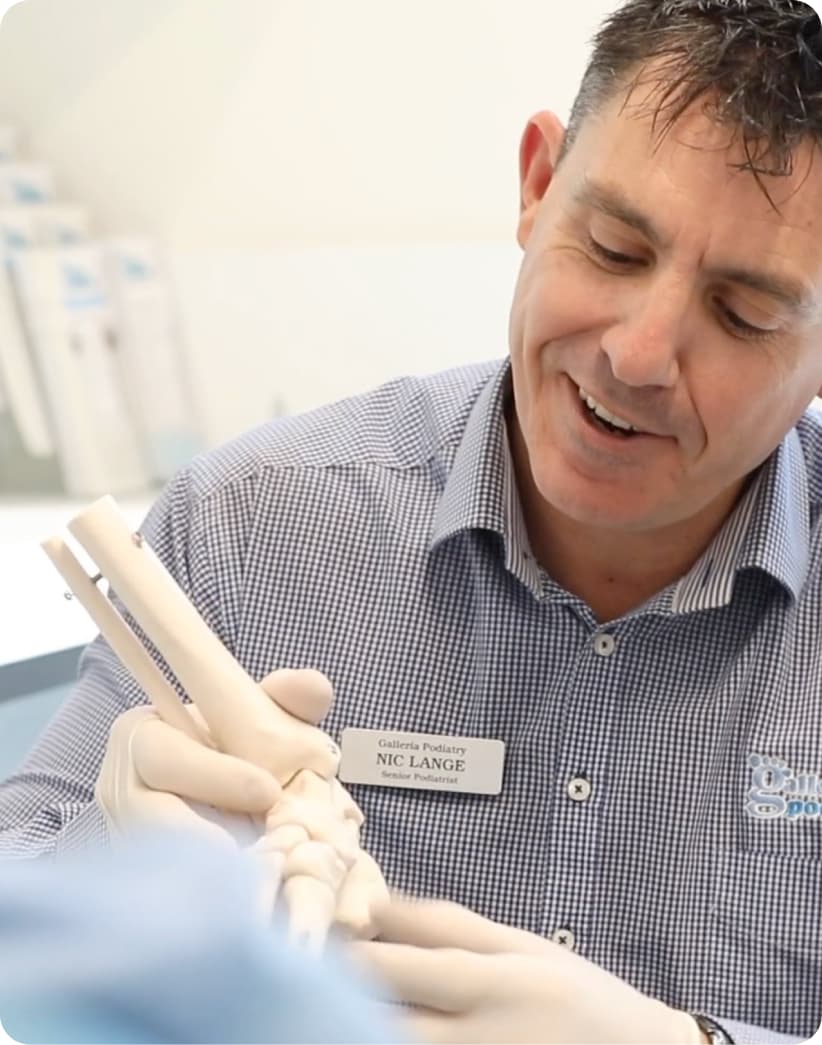
Ready to fix your Achilles Pain?
For treatment of your Achilles pain consult Galleria Podiatry for a diagnosis and a tailored treatment plan. If you’re located in Morley and near Bayswater, Galleria Podiatry provides specialised care for foot and ankle issues for all patients in the City of Bayswater.
Your Achilles Tendonitis Questions Answered
What's the difference between insertional and non-insertional Achilles tendonitis?
Insertional Achilles tendonitis affects the lower portion of the tendon where it attaches to the heel bone and can occur even in people who aren’t physically active. It’s often associated with bone spurs and tends to be more common in older adults. Non-insertional Achilles tendonitis affects the middle section of the tendon and typically occurs in younger, more active individuals. This type involves small tears in the tendon fibres that cause swelling and thickening. At Galleria Podiatry, we can diagnose which type you have and develop an appropriate treatment plan.
How long does it take for Achilles tendonitis to heal?
Recovery time varies depending on the severity of your condition and how quickly you seek treatment. Mild cases may improve within a few weeks with rest and appropriate care, whilst moderate to severe cases can take several months to heal completely. Chronic Achilles tendonitis that has been left untreated may take six months or longer to resolve. The key to faster recovery is early intervention and following your podiatrist’s treatment plan consistently. At Galleria Podiatry, we’ll assess your specific situation and provide a realistic timeline for your recovery.
Can I continue running or exercising with Achilles tendonitis?
Continuing high-impact activities like running whilst you have Achilles tendonitis can worsen the condition and delay healing. It’s best to rest from activities that cause pain and switch to low-impact exercises such as swimming, cycling, or using an elliptical machine to maintain fitness. Once your symptoms improve, you can gradually return to running under guidance from your podiatrist at Galleria Podiatry. We’ll help you develop a safe progression plan that includes proper warm-up routines, appropriate footwear, and monitoring to prevent re-injury.
What are the warning signs that my Achilles tendonitis is getting worse?
Warning signs include increasing pain that doesn’t improve with rest, pain that occurs even during normal walking or at rest, significant swelling or a noticeable lump on the tendon, reduced ankle flexibility, or a creaking sensation when moving the ankle. If you notice the skin becoming warm or red, or if you hear a sudden pop or snap in the tendon area, seek immediate medical attention as this could indicate a partial or complete tear. At Galleria Podiatry, we recommend early assessment if you notice any of these symptoms to prevent progression to a more serious injury.
Will I need custom orthotics for my Achilles tendonitis?
Custom orthotics are often highly effective for treating Achilles tendonitis, especially when the condition is caused by excessive foot pronation (rolling inwards). Orthotics help control abnormal foot motion, reduce over-stretching of the Achilles tendon, and decrease traction forces on the tendon. During your assessment at Galleria Podiatry, we’ll evaluate your foot biomechanics and gait pattern to determine if custom orthotics are appropriate for your situation. Many patients experience significant pain relief and faster recovery when orthotics are part of their treatment plan.